Tag Archives: AI

Someone Is Telling Your Story Online. It Might Be AI—and It Might Be Wrong. Our Q & A Tells You What to Know.

Internet Law


Q: How has AI changed online reputation management?

AI has fundamentally transformed how people discover information about you. Nearly half (47%) of Google search results now display AI-powered overviews before traditional website links. This means AI systems are increasingly acting as gatekeepers to your reputation, summarizing and presenting information about you before users ever click through to your actual website or profiles. The content you control must now be recognized and valued by AI systems that determine what information reaches your audience.

Q: What is the “AI vacuum problem” and why should I care?

When there’s minimal information about you online, AI systems fill that vacuum by creating what The New York Times calls “Frankenpeople”—AI hallucinations with fake biographical details and mashed-up identities. The AI Incident Database has logged over 3,000 incidents of AI mischaracterizing real people.

Q: Where does AI get its information about me?

AI platforms train on massive datasets from web crawls (like Common Crawl containing billions of web pages), community forums, wikis, and search engine results. This means much of what AI says about you comes from publicly available internet content.

Content Strategy in the AI Era

Q: What’s the difference between traditional SEO and what works in the AI age?

Traditional SEO (search engine optimization) focused on tactics like keyword stuffing and link farming. AI-powered search uses semantic alignment—understanding the context, intent, and relationships between concepts. Modern search systems prioritize content that demonstrates E-E-A-T: expertise, experience, authoritativeness, and trustworthiness. Quality matters more than quantity. As Google states: “Focus on creating people-first content to be successful with Google Search, rather than search engine-first content made primarily to gain search engine rankings.”

Q: Should I use AI to generate content about myself?

AI serves as an excellent editing and proofreading tool, but mass-produced AI content is unlikely to achieve top search rankings. Our research analyzing past client campaigns reveals that well-written, authoritative content created years ago continues to populate top search results and AI summaries, while AI-generated mass content is less effective.

Q: How has AI made reputation repair harder?

Displacing negative media articles, old legal notices, and problematic content now takes significantly longer. AI systems prioritize the credibility of established news sources and official documents, keeping them prominently ranked. This makes reputation repair campaigns more difficult, time-intensive, and expensive to execute successfully.

Threats and Protections

Q: What Are AI-generated smear campaigns?

AI has made orchestrated reputation attacks exponentially easier: dozens of fake social media accounts releasing daily posts to denigrate powerful individuals, fraudulent websites spreading misinformation, and AI-generated deepfake videos showing people appearing to say things they never said. Legal remedies are a quagmire.

Q: Are deepfake videos really a threat to my reputation?

Yes. AI-generated deepfake videos and synthetic media pose growing threats to personal and organizational reputations. These fabricated videos can show you appearing to say or do things you never did, and they’re becoming increasingly difficult to detect. Such content can spread rapidly across social media before it can be debunked, causing lasting damage to credibility and trust. Having a strong, established online presence with verified content provides crucial context when false content emerges.

Q: What personal information about me is at risk online?

Online databases actively mine obscure sources for biographical information using AI programs that continuously scan publicly accessible websites. Your home address, age, family members’ names, and satellite pictures of your home may appear on up to 25 search databases selling this information for as little as $10. This puts your privacy and personal security at risk.

Practical Action Steps

Q: What are the first three things I should do to improve my online reputation?

First, conduct an honest audit: Clear your browser cookies and Google your name to see what the world sees. Check AI platforms too. Count how many of the first 10 Google results you control. Second, claim your digital real estate: Create LinkedIn, Instagram, and X profiles even if you don’t plan to use them actively—these platforms rank highly in search results. Register a Gmail account in your name to access Google’s ecosystem. Third, start a content plan: blog posts, articles, podcasts, or videos that demonstrate your expertise and establish your narrative.

Q: How often should I update my online content?

If the content you oversee is more than a year old, it’s time to update. Professional headshots should be refreshed every two years—personal authenticity is valued both online and offline. Websites using obsolete tech platforms make your brand look out of touch. Create and activate a content plan to publish new material weekly, monthly, or quarterly depending on your goals and resources.

Q: What platforms should I prioritize?

LinkedIn profiles always appear on the first page of Google searches for your name, making it essential even if you don’t use it for networking. Wikipedia, with over 500 million monthly users, is one of the top-ranked sites globally. Facebook, Instagram, and X can appear on your first search page when posted too frequently. For thought leadership, consider modern platforms like Substack for newsletters, podcast hosting, and short-form video on TikTok, YouTube, or LinkedIn—these are how successful influencers across generations amplify their voices.

Q: How long does it take to see results from reputation management efforts?

Every online reputation is different and requires a strategic plan and timetable. It can take up to three months to begin restructuring search results and up to a year to substantially improve them. The less information online about you, the more quickly ORM efforts deliver results. The more prominent and diverse your existing sources, the more complex and time-consuming improvement will be. Patience is essential—there is no fast and easy solution.

Crisis Management

Q: What should I do if I’m facing an orchestrated online attack?

First, have a reputation monitoring system in place (Google Alerts at minimum, or comprehensive systems like Meltwater or Mention). Second, assemble a crisis response team available 24/7 including legal counsel and communication specialists. Third, establish response protocols before a crisis hits. Fourth, never engage with anonymous trolls—their posts are meant to provoke response. Finally, update existing information about you on appropriate platforms rather than responding directly to false accusations. Facts and transparency are the best remedies for disinformation.

Q: Can I sue to have negative content removed?

Online defamation lawsuits constitute a growing area in legal practice, with large awards and settlements underlining how seriously courts view digitally amplified defamation. However, thanks to Section 230 of the Communications Decency Act (passed in 1996 and not updated since), website operators have legal immunity over what is posted on their sites except in cases of clear defamation. The only way to access information about anonymous posters is typically through a court order resulting in a subpoena. Legal action is possible but complex—consult with an attorney specializing in internet and media law.

Q: What’s the biggest mistake executives make regarding online reputation?

Benign neglect. The prevailing reason so many people suffer from online reputation issues is that they’ve never been proactive about managing their online reputations until a crisis forces them to. When that’s the case, it takes far longer to establish a strong profile than if one had been in place from the start. In the age of the “portfolio economy” where everyone faces more competition than ever, waiting until you need reputation management is waiting too long.

For Business Leaders

Q: How can CEO missteps damage organizational reputation in the AI age?

The Harvey Weinstein scandal and subsequent #MeToo movement led to far more scrutiny of executive behavior. Today’s threats include poor decision-making without considering public perception, tolerating workplace harassment (the reputational damage and lawsuit costs aren’t worth it), lacking diverse leadership that represents your customer base, and having no social media policy (only half of employers have one). In our hyperconnected world, assume any behavior could be recorded and republished online—because it can be.

Q: What lessons should boards learn from recent corporate crises?

Have clear policies about editorial independence and crisis response before problems erupt. Understand that appeasing one political constituency may trigger boycotts from another. Calculate full potential impact: stock price, customer losses, brand damage, and shareholder legal exposure. Prepare for attacks through regulatory threats, not just public opinion. Recognize that appearing to cave to pressure can damage brand loyalty even if it satisfies immediate demands. Consider long-term reputational implications of every major decision.

Q: Why is social media both a risk and an opportunity?

Social media is a major source of risk for companies but also one of the best solutions for customer service and relationship building. It’s often used as a barometer of public opinion during crises. When a crisis hits, post your official statement on your social media platforms and website—these are among the first places the public and media look for your response. Having an active, authentic social media presence before a crisis provides a platform for immediate, direct communication with stakeholders.

Looking Forward

Q: What’s the future of online reputation management?

As AI continues to dominate search, the gap between those who proactively manage their online presence and those who don’t will widen dramatically. The “right to be forgotten” exists in Europe and Argentina but not in the U.S., meaning Americans must be more vigilant about reputation management. Expect AI systems to become more sophisticated at detecting synthetic content, making authentic, high-quality human-created content even more valuable. The fundamental principle remains: unless you’ve thoughtfully contributed to the online body of information being collected and analyzed about you, you have very little control over the profile AI and the internet present to the world.

Q: Is it too late to start managing my online reputation?

It’s never too late, but starting now is far better than waiting for a crisis. Begin with the essentials: audit what’s currently online about you, claim your name space across major platforms, update photographs and biographical information, and start publishing quality content that demonstrates your expertise. If you’re facing active reputation challenges, consider professional help from specialists who understand both traditional reputation management and AI’s emerging role in shaping online narratives. The key is taking that first step toward controlling your digital narrative.


Ready to take control of your online reputation in the AI age? Download the complete guide: “Reputation Reboot: Online Reputation Management in an AI World” for expert insights on protecting and enhancing your digital presence.


 
 
Blake Lively smear campaign

I’m proud to have been featured as an expert in Interfor International’s recent blog post on social media risk management. In today’s digital landscape, the intersection of online behavior and reputation has never been more critical.

The Hidden Dangers of Social Media

As I shared with Interfor International, the risks associated with social media are far more serious than most people realize. What might seem like a harmless post in a moment of frustration can have devastating consequences for your career, reputation, and future opportunities.

The article highlights a sobering reality: we scroll through Instagram, Facebook, and other platforms without the same wariness we’d have walking down a dark alley at night. Yet the dangers can be just as real, and the fallout can be swift and devastating.

The Real Cost of Impulsive Posts

In my work as CEO of Reputation Communications, I’ve seen countless examples of how a single intemperate social media post can destroy careers and reputations. The current era of ideological divisiveness has created an environment where people get cancelled every day, jobs are lost, and reputations are shattered.

What’s particularly concerning is that many of these consequences happen behind the scenes. As I noted in the article, there are countless examples of people simply not getting hired, not being accepted to schools, or being excluded from opportunities because organizations are becoming increasingly sophisticated in evaluating social media histories. You might never know that your past posts cost you a major job or an important opportunity.

The Defamation Factor

As an expert witness in defamation cases, I’ve seen firsthand how social media can function as what the article aptly calls “defamation factories.” People often have no grasp of the legal and reputational risks they’re taking when posting harsh attacks online. With the proliferation of AI and deepfakes, these challenges are only becoming more complex and dangerous.

My Advice: Pause Before You Post

The guidance I shared with Interfor International is simple but crucial: “People post too quickly, and they let emotion drive them. It would be helpful if people ask themselves if posting something harsh is the most effective way to use your political capital.”

When emotions run high, time is your friend. Before posting anything controversial or harsh, take a break, take some deep breaths, and ask yourself:

Will this post serve me well in the long run?
Could this come back to haunt me?
Is this really the most effective way to make my point?

Sometimes the best way to protect yourself on social media is to simply do nothing. The same is true with sending heat-of-the-moment texts and emails.

Prevention Is Better Than Repair

While I’m here to help clients repair damaged reputations and rebuild their professional standing, my greatest hope is that people won’t need my services in the first place. The work I do helping people dig out of reputation crises is essential, but it’s far better to avoid creating the crisis altogether.

For more information about reputation management and protecting your digital footprint, visit Reputation Communications. If security and reputational threat monitoring concerns are uppermost in your mind, check out Interfor Academy, which provides elite speakers and one-of-a-kind training programs in those areas for businesses and organizations worldwide.


AI and reputation management

It’s crucial to be aware of how massive evolutions in the tech world are shaping the ways others see you online.

AI is rapidly changing the Internet in ways that affect how you and your organization appear on Google. If you recently searched yourself and noticed that your name and organization are framed differently than they were just a few months ago, the big reason is AI.

Last February, The Wall Street Journal’s Christopher Mims wrote that we have taken for granted the simple act of online search for decades. “Online has meant googling it and clicking on the links the search engine offered up,” he wrote. “Search has so dominated our information-seeking behaviors that few of us ever think to question it anymore.”

That’s all changed. Google recently rolled out AI summaries of its own search results to all U.S. users. You’ll notice that concise overviews appear before many websites. Take a look, there is a high likelihood one appears before your own personal and company websites.

Why did this change happen? The central ecosystem that made Google the reigning leader in search over the past few decades is under threat by tech competitors that are seriously impacting its standing and once-overwhelming digital advertising dominance. The WSJ’s Mims explains that, now, people are heavily turning to AI to answer their online questions. This is deteriorating the quality of search results, which are now “flooded with AI-generated content.”

One example? OpenAI is now including “search” to its ChatGPT services.

Here at Reputation Communications, we do use AI to create high volumes of social media content and general information texts. But, the thought-leadership content we create for our clients is produced by professional writers — not AI. The reason is that AI is impersonal and sometimes inaccurate. These systems scrub from a wide range of sources online. Much of their output is just rehashing existing writing. This can result in content that doesn’t create value for readers and could even pose reputational risks and threats of plagiarism.

This is why it is crucial to turn to services that are reliable and trusted. Google’s ranking tools focus on the usefulness of content. When building your brand’s online presence, your content has to be high-quality, relevant, and add measurable value to your audience. Think podcasts and videos, which rank highly online. Adding them to your thought-leadership mix will be a big plus in the year to come.


P.R. in the Digital Age

Recently Don Aviv, President of Interfor International and a Reputation Communications Advisory Board member, and Shannon Wilkinson, our founder and CEO, were interviewed on the topic of reputation management for an Interfor Academy webinar. Their moderator was Jeremy Hurewitz, Head of Interfor Academy.

Don Aviv, President, Interfor International

Interfor Academy is a speaker’s bureau that enables organizations to book elite presenters for conferences, corporate off-sites, or risk trainings & tabletop sessions.

Don and Shannon come from two different sides of reputation management. He is on the investigative, data research, analytics, and monitoring side, helping organizations listen to conversations about them online and red flagging any that have reputational, privacy, or security risk aspects. (We interviewed him on the topic of due diligence in 2018; and more recently published his article, Scrubbing Your Personal Info from the Internet.)  Reputation Communications, manages, amplifies and repairs reputations.

We are interviewing him about due diligence investigations, self-checks (or reverse due diligence), and how the deep dark web plays a role in threatening reputations.

How common is it now for deep dives to be done before important hires and partnerships are made?

It is increasingly common. That’s the good news for those of us who campaign constantly for companies to pay attention to reputational and security risk. The difference is in the level of diligence done and making a smart decision about that and what role the individual will play in any sort of company or partnership that is being established.

There is a fast-growing array of technological tools that can help employers get comfortable with low to mid-level hires. That sort of background check is cheap and somewhat effective. These are commoditized services that can give an employer a little reassurance that their prospective employee doesn’t have a criminal record, hasn’t declared bankruptcy, and did indeed graduate from the educational institution they are claiming on their resume.

But when it comes to more senior hires, or major investments being made and partnerships established, it is critical to go much deeper and try to understand the individual’s background and character at a more granular level, and drill down on any red flags to weigh those against whatever that person might contribute to what you’re building. So, in these cases, the more commoditized checks are insufficient.

Those who retain Interfor do so because our analysts have extensive experience in locating and evaluating deep dive public records and providing insight into what they find. True expertise comes into play when it comes to the very human side of collecting qualitative intelligence on a subject.

You used the term reputational “self-checks” during the webinar. What do you mean by that?

We are frequently hired by clients who want to know what their reputational assessment looks like and what might be used against them by someone looking to do them harm – physically or reputationally.

Your firm conducts social media threat monitoring for major corporations as well as for high-net-worth clients. How does that work, and what are they looking for?

While we certainly support HNW clients and celebrities around the world, we also support a large group of executives, nonprofits, foundations and start-ups.  That client base includes any entity or individual that receives negative or unwanted attention through social media, chatgroups, blogs, and other online chatter. We have a global team of highly trained analysts who monitor threats 24/7 for a variety of companies and individuals across all common languages. They are deeply knowledgeable in assessing when someone might turn from an online troll to a true threat. They help identify new threat trends and help clients be proactive in preparing for any incipient risk.

How is AI going to impact what information appears on the internet about people and organizations?

AI will certainly be a force of change. We have seen a remarkable uptick in fraudulent activity ranging from Deepfakes and impersonations, all the way to confidence scams and straight-up harassment and trolling driven purely through AI systems.

For example, one of our clients, a well-known radio personality, has been inundated with thousands of fake product endorsements and ads geared at defrauding his listener base around the world.  Our Social Media Threat Monitoring Team identifies and works to knock down approximately 50 fake ads and websites a week, yet this is likely a drop in the bucket.

Ultimately, without strong regulations, AI systems may add considerable fuel to the “fake news” ecosystem, and your average internet user will have even more trouble discerning fact from fiction.

*

As President of Interfor International, Don Aviv directly supports Chief Security Officers and General Counsel of some of the leading corporations, financial institutions and family offices around the world.

An author on physical security, threat mitigation and corporate security matters, he serves as an expert witness on security-related legal matters. His credentials include Board Certified Protection Professional (CPP); Board Certified Physical Security Professional (PSP); Professional Certified Investigator (PCI) and licensed New York State Investigator. He is an executive board member of Strength-to-Strength, a non-profit organization dedicated to supporting victims of terrorism. Mr. Aviv is also a board member of The Community Security Service, a non-profit organization dedicated to training and protecting local communities.

*

This article is part of our continuing Interview with an Expert series.


AI.Reputation Communications

Welcome to the era of artificial intelligence (AI). How this tech is being harnessed by tech companies and search engines like Google, in particular, also means your reputation could be on the line.

This is a big threat for people who haven’t worked on managing their reputations online.

Misinformation can be spread easily when there is a vacuum of information about you and your brand. Many people just have LinkedIn profiles that often sit idle and without updates — and that’s it.

Now, it’s time to change that.

The New York Times’s Tiffany Hsu delved into the reputational risks that an unchecked AI can bring. In an article about how an AI-fueled lie can impact your image online, Hsu reports on the fact that many people currently have little to no protection from ever smarter tech.

This is still new. Current AI has a hard time with accuracy. An AI-generated photo of you might give you a photorealistic face — but 12 fingers. The article mentions Google’s Bard chatbot being unable to provide accurate information about the James Webb Space Telescope. These are details that you, my fellow human, would be able to find with a quick manual Google search yourself.

While the initial harm that can come from AI-written inaccuracies about you may seem minimal and harmless, this isn’t something to be taken lightly. Hsu writes this tech can “create and spread fiction about specific people that threatens their reputations and leaves them with few option for protection recourse.” Many leading tech companies have only started putting guardrails in place.

If potentially libelous information appears attributed to your name or likeness, there isn’t much legal protection right now, Hsu adds.

There are current examples of legal fights against the machine, but they are few and far between. As we all know, misinformation tied to our names and our brands can leave an indelible stain online. AI “Frankenpeople” have now become common, which Hsu defines as “AI hallucinations” with “fake biographical details and mashed-up identities” that can emerge easily and be tied to your name if there isn’t much information out there to begin with.

This is where we come in.

  • You must be proactive about shoring up your reputation online by way of a personal branding website.
  • At Reputation Communications, we help you with publishing articles and blog posts, as well as disseminating op-Eds and thought leadership content.
  • We also harness your social media strategically.

We aim to create a reputational firewall to protect against this onslaught of AI threats.

Since search engines rely increasingly on AI, now isn’t the time to sit idle or stick with the status quo. A static public Facebook page that hasn’t been updated in five years isn’t the way to go.

Hsu writes that the AI Incident Database has logged more than 550 entries this year. That number will only grow. She quotes Scott Cambo, the man behind this tool, who says that we can expect “a huge increase of cases” tied to AI mischaracterizations of real people.

AI will undoubtedly change the way we get information and connect with the world. Now is the time to makes sure that information about you and your brand is accurate.

Your reputation is counting on it.


Reputation Risk for Start Ups

During a decade-long stretch of speaking with successful leaders seeking online reputation management (and being engaged by many), I’ve observed that the effect of reputational harm can be most acute when it threatens a new business venture.

When you are preparing to launch a start-up, you’ve often spent years developing an app, service or product. You have brilliant partners, a gifted team and the prospect of serious VC interest. During an immersion into preparing your new venture, what you may not anticipate is the amount of scrutiny you (and everyone associated with you) may face by prospective investors and partners, much of which you are not aware of.

Among the red flags they are looking for are signs or accusations that you (or your college-aged former self) have participated in behavior that may threaten the business in the future, including:

·         Racist, sexist, or discriminatory language or acts, even as a joke

·         The dissemination of sexually explicit material

·         Threats  of violence

·         Other behavior that may be viewed as inappropriate by people vetting you

Not just you, either. Your whole team, as well as any partners.

Investors Avoid Reputation Risk

In today’s world, investors can’t afford to be associated with anyone with a record of those red flags. Their fear of potentially being liable in any lawsuit that may result from your past behavior, or your potential future behavior, is chief among their concerns. They don’t want the reputation risk, either.

We have seen tragic consequences for clients who have been perceived as being inappropriate in their language or behavior during college, upon graduation or later in their career. In more than one instance, clients have been named in baseless lawsuits, filed against them and later dropped by a party with malice, which still show up online. Some have also been cancelled or fired with no investigation or proof. This can happen over any number of perceived wrongdoings, and even if they did nothing wrong the harm to their reputation is the same as if they had engaged in the behavior of which they were accused.

High Cost of Perceived Wrongdoings

In these and other cases, high-caliber leaders were either unable to find a job or lost a job and could not attract a new one, despite years or decades of expertise in their industry. (Men, in my view, are especially vulnerable to such issues. In my article, The Reputation Risk of Being Male, I cite how even a simple misunderstanding can have grave professional and reputational consequences. But women are by no means immune from baseless allegations of wrongdoing.)

Deep-dive due diligence is increasingly done using AI and big data. Searches of you go back years, as long as the internet has been used, and once-buried information such as legal notices that were published in a long-dead newspaper, can suddenly become digitized and available online. Those pictures of you on college break 5, 10 or 20 years ago; the messy divorce; all your social media postings, litigation history, and complaints filed with regulatory authorities – literally anything you’ve done wrong can be unearthed and become a cause for concern.

For investors who are considering backing your venture, for potential partners whose reputation will be tied to yours, and for everyone you’ll lean on for help while you build your venture toward success, any cause for concern is one too many. New ventures are always a risk. A reputational challenge puts that risk outside nearly every appetite.

How to Prepare

However, if you have such issues and are preparing to launch a new venture, there are many ways to prepare. Even if you aren’t aware that you have these issues, approaching your personal online brand as if you do is the best positive publicity you can create for your business.

The first is to initiate a personal branding campaign to position positive, credible information about yourself and your achievements online. Next, if you are on social media, vet it to assess if it positions you for where you are now…and where you want to be. Making sure the Internet reflects all the positive things you accomplish – awards you win, important achievements, etc. – creates impressions that help to instill trust at the moment a potential client comes in contact with your brand.

Invest in the Same Reputational Deep Dive in Yourself that Potential Investors Will Do

Provide information as a thought-leader. Whether you’re a business or an individual in a professional space, you possess knowledge that potential clients need. Sharing that knowledge through articles and blog posts helps to establish credibility, and it is an easy way to allow clients to get to know you. It’s also an effective way to increase the volume of information available about you on the Internet. The more present you are, the more seriously partners and potential clients will take your new venture.

Finally, invest in the same reputational deep dive in yourself that potential investors will do. Find every negative piece of information, every rumor, every half-told story that paints you in a negative light. Those can be confronted through a multifaceted online reputation management strategy, and it’s always possible that there’s something out there that you don’t even know exists.

Reading my firm’s article, The Essentials: Online Reputation Management FAQs, is a good place to learn more about how an online reputation can be threatened and how to manage those threats. It is a highly ranked article on Google that provides step-by-step actions for ensuring your brand is top and center on Google, where the world (and AI) vets you.


Crisis management

The popular TV program Jeopardy recently found itself in a crisis after selecting long-time producer Mike Richards as the late Alex Trebek’s replacement without fully vetting him.

Sony Pictures Entertainment apparently failed to conduct a deep-dive audit of Richards’ social media posts, podcast and other appearances, which, reporter Claire McNear discovered, had plenty of the type of red flags virtually all due diligence agencies now look for.

Jeopardy isn’t alone in this omission. Google landed in the same position this year when the Washington Free Beacon discovered an antisemitic blog post written in 2007 by Kamau Bobb, its global diversity lead. Google quickly reassigned Bobb from the diversity team, but the revelation caused offense to many of Google’s employees. In this case, as in the case of Sony Entertainment’s evaluation of Richards, a review of the prospective employee’s past statements would have uncovered the offensive material and avoided the reputational damage.

Thousands of organizations now routinely conduct deep-dive background checks that focus on blogposts, social media posts and other types of commentary that can be found online by anyone…with some digging. But thousands don’t. That can lead to a major reputational crisis.

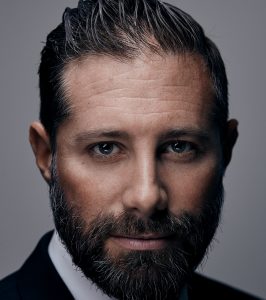
Valital Technologies is a Canadian-based company, helping organizations manage reputation risks. With Valital’s AI-powered platform, organizations can stay ahead of unexpected reputation risks by monitoring and analyzing adverse online news on potential and current business stakeholders. Valital believes organizations need to “verify, then trust” in order to make better, more confident decisions about the people with whom they choose to do business.  We checked in with Ronny Aoun, Valital founder and CEO (shown below), to get the latest on how AI is being used to vet clients, business partners, third-party service providers or any individual a business is hoping to work with. 

Ronny Aoun

Q: Why do you think companies like Sony Pictures Entertainment fail to conduct due diligence for such high-profile hires?

RA: Many executives take people’s track records, experience and reputation for granted, especially if they’re star performers or well known within an industry. In the case of Jeopardy, Mike Richards had already proven himself as an executive producer for two well-loved game shows: The Price Is Right and Let’s Make a Deal. There’s a certain level of complacency involved. You often see this in more benign situations, such as in the promotion of a long-time employee into a new, more high-profile role. Some managers subscribe to a one-and-done approach in that instance; that is, if the person has been vetted once before — even if it was years ago— that person is OK. That’s a very naive and potentially brand-damaging way of thinking, as Sony found with Mike Richards.  

Q: Have you helped companies that have had such crises?

RA:  We work with organizations that have run into things like this at one point or another. Luckily, most are never as high-profile as the Jeopardy case. The reason we exist is to help these organizations make better, more confident decisions about who they choose to do business with. Our job is to help them avoid such situations. We don’t give them advice on who to engage with; we make no kind of assessment or evaluation. All the decision-making is in their hands. What we do is provide them with information that will give them a fuller picture of the individual stakeholder.

Q: Do most HR and legal departments of major organizations understand the ways AI are now being used by agencies like Valital? If not, why don’t they?

RA: Based on our experience, people are generally aware of AI and the fact that it can be a gamechanger in so many ways. They don’t necessarily understand the full extent of one powerful aspect of AI, which is Natural Language Processing or NLP. NLP is a form of AI that enables computers to extract language from unstructured text. In Valital’s case, our AI learns human language and uses content and context to perform real-time search and pulse analysis of online media, blogs and tweets, flagging misconducts related to universally recognized misbehaviours: discrimination, fraud, harassment, violence and abuses. We also find that many organizations, even ones that are large and extremely profitable, are still highly reliant on doing adverse news monitoring manually.  They don’t quite appreciate just how much more efficient an intelligent platform can be. They will get far more information, more quickly and consistently. When people are performing manual searches, you will find that in the same team, one person might stop at page 2 of his search engine results page, while another goes further. NLP eliminates the inefficiencies, freeing up resources to focus on more high value work within their organizations.

Q: How is your platform set up to use AI to vet assigned individuals…and do they know they are being vetted?

RA: First, it’s important to note that we see Valital as part of an organization’s integrated risk management efforts. It’s not intended to be the only tool in a team’s arsenal. Many organizations do standard background checks on individuals via databases. Databases are important and will continue to be so. Valital adds another layer to this by scouring the internet for fast-moving, dynamic open-source intelligence (OSINT) to flag universally recognized misconducts.

Valital is a Saas-based platform, requiring virtually no implementation. An organization determines how many validations they need to perform annually as part of their KYC process or third-party verification process, for example. There are no unwieldy and expensive licensing agreements to adhere to, and we encourage organizations to use the platform across the organization’s functions that will benefit from being able to better assess potential business relationships. Because the AI simply gathers and categorizes publicly available information, there’s no concern about breaching people’s privacy. Our AI is simply able to find more information faster, better and more efficiently than a human can.

Q: What advice do you have for executives responsible for determining whether a new business relationship is worth pursuing? 

RA: Here’s the truth: Reputation can either drive value or destroy it. It’s Warren Buffet who says it best, “It takes 20 years to build a reputation and five minutes to ruin it.” Effectively managing reputation risk is not an option; it’s an imperative. And that means deploying real-time information and processes by using the right tools and technologies that will build reputational resiliency across the organization. This means investing in rigorous due diligence, especially around these nuanced misconducts that we monitor for.

Behaviour that used to be tolerated in the past is often not acceptable today, and you want to have access to all the publicly available information about an individual before you decide. That’s why we’re constantly talking about verifying first, then trusting. The old adage of “trust, but verify,” doesn’t cut it in today’s world, because trusting the wrong business stakeholder can damage brands, sink stock prices, erode shareholder value and make organizations non-compliant with regulators, thereby incurring hefty penalties. It pays to do proper due diligence, and Valital helps organizations do it better.

This is part of our continuing series of interviews with experts whose work relates to reputation management.