Sports reporter Britt McHenry was in the headlines last week after a video surfaced of her making harsh, verbally abusive comments to a tow truck company employee after her car had been towed away.
This week’s “Crisis of the Week” column in the Wall Street Journal sums up the incident well:
A video of the incident shows Ms. McHenry lashing into the employee, making fun of her appearance and education, and questioning her choice of employers. Ms. McHenry later apologized on Twitter, and ESPN responded by suspending Ms. McHenry for a week. Her comments to the tow-truck employee came days after she put a post on Facebook asking her followers to “take the high road and be nice to people.”
Discussion online and off continues about whether ESPN should have allowed her to return, and whether her apology was sufficient. Our take? Everyone makes mistakes. The best-intentioned of us have bad days (and even very bad days). Living with pressure is part of being in the public eye. Most public figures can recover from an incident such as this, but time—and Ms. McHenry’s thousands of fans—will decide how this rude tirade will impact her public image. That includes whether they want to continue watching her on ESPN.
“Twitter is an opportunity. Facebook is an opportunity. To say what you feel. To try to pick people up. To try to be positive. To try to add something to society. To let people see you transparently. You cannot be defined if you’re on social media by someone else. You will define who you are, and if you’re negative, that’s your fault. But here is who you are. If you are negative, it will come through. Five years of being on twitter and facebook, are you gonna lie for five years? You are who you are. But we’re trying to tell those kids, you build your brand or you break your brand down. You are who you are through social media.”
A Master at Online Reputation Management
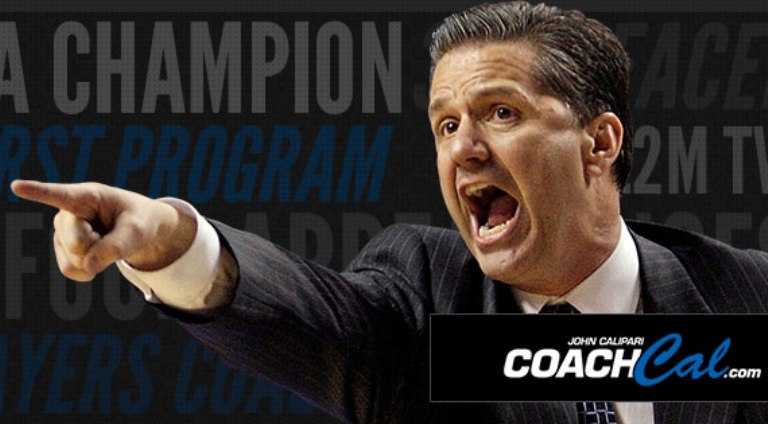
With NCAA violations blemishing his past success at UMass and Memphis, and critics accusing him of exploiting the NBA’s “one-and-done” rule to win his first national title in 2012 and lead the Wildcats to this year’s final, Calipari has certainly had his share of controversy. Through that, it’s been clear that he is shrewd and effective at managing his online reputation.
Since joining Twitter in 2009 (right around when he took over at Kentucky), Calipari has averaged 4.6 tweets per day, according to his account’s statistics on Socialbakers. “I give out information, I’m transparent to our fans,” he explained on ESPN Radio’s Mike and Mike. “I tell them how I’m feeling.” He gets help from CoachCal.com editor Eric Lindsey, who “oversees Coach Calipari’s social media platforms.”
Adept at Using Social Media to Build His Brand
Such candor has helped earn Calipari praise as “NCAA’s last honest man,” but it’s not the only aspect of online reputation management that he’s been adept at harnessing. He also recognizes how celebrity can bolster his brand and recruiting power, as he demonstrated while attending his friend Jay-Z’s concert at Barclay’s Center in 2012. “Calipari didn’t hesitate when it came to letting his 1.2 million Twitter followers know about his backstage pass to the concert, tweeting out this picture of himself in front of the stage,” Rob Dauster observed in a Sports Illustrated piece.
Even Calipari’s comments about social media above seem to be part of “selling his program,” as Dauster points out in a recent NBC Sports article. Calipari understands that the premier young players that are key to Kentucky’s success view social media not as a “waste of time,” as Pitino argued, but as a normal part of everyday life—and something they’ll need to know when they make it to the NBA.
About You(Online)
Reputation Communications publishes You(Online) to help educate CEOs, C-Suite executives, rising stars and high net worth individuals about online reputation management.
Reputation Reboot addresses real-life online reputation management (ORM) challenges faced by CEOs, executives, VIPs and their organizations. Unless they are public figures, their names and related descriptions of all individuals and companies discussed are changed to protect their privacy. For a quick look at the types of situations facing many professionals, scroll down and check out the headlines.
Online reputation management enables you to take more ownership over what appears about you on the Internet.
Without it, the world controls how you look online.
Here are ten examples of the ways online reputation management is used by individuals, companies and organizations.
To ensure up-to-date and accurate information dominates search results for an organization or individual’s name.
To ensure that factual, credible reference material is readily available online.
That reduces the chance that fraudulent information will impact a brand.
To remove unwanted or inappropriate information, photographs or other content from the first few pages of Google search results.
To monitor social media and online forums for red flags signaling potential on- and offline threats against high-profile individuals and their organizations.
To create a strong online presence about a topic.
That presence acts as a barrier against potential distortions from third-party content, including anonymous and defamatory material. Without it, such items can go straight to the top of searches – and stay.
To ensure that your story is told by you and not by former partners or other potentially biased parties.
To establish a reputation within your area of expertise on multiple online platforms.
To create an online legacy for a VIP who is preparing for retirement or to exit an organization.