Tag Archives: Reputation Communications

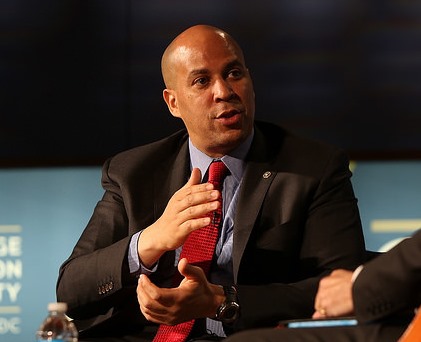
Cory Booker served as Major of Newark, N.J., from 2006 to 2013.  We originally published this piece in October 2013, during his race to become the junior U.S. Senator from New Jersey. It highlights how his deft embrace of social media has played an important role in his success. Follow him on Twitter @CoryBooker to gain insight into his strategy.

Though Booker has utilized a variety of social media platforms, his active and engaging presence on Twitter has been particularly exceptional. In 2010, for instance, he used tweets to communicate directly with Newark residents during a major snowstorm—a move that in turn drew national media attention. “Not only do Newark residents know that Booker is clearing the driveways of people with Twitter handles, so does much of the national political twitterati, which is blogging about him,” the Washington Post’s Krissah Thompson observed at the time.

Recognizing opportunity

“We all need to be who we are and be ourselves but not being in social media is almost like Nixon not wanting to put make up on for a TV appearance,” Booker told Reuters’ Paul Smalera during an interview in June. The mayor also recounts to Smalera how his first foray into Twitter was inspired by a chat with Ashton Kutcher:

“I remember I was travelling back to my law school and driving up highway 95 talking to him. He spent must have been 45 minutes on the phone, really challenging me and explaining to me the benefits of taking control of your own media, of connecting with thousands of people. He said, “Look, I want you to do it but I don’t just want you to do it. I want you to dive in head first and be authentic on the platform, take risks.’

Booker’s social media skills have earned him the title of “Hometown Hero” in “TechCrunch’s 20 Most Innovative People In Democracy 2012,” which observed that his “million-strong Twitter feed spouts everything from dense nuggets of inspiration to real-time problem-solving with his constituents.”

Earlier this year at SXSW Interactive, Booker spoke about how he has “used Twitter to interact with his constituents on a daily basis, responding to questions and complaints at all hours of the day,” as well as how, with the help of Twitter, his “constituency is technically only 280,000 people, but it’s also the United States.”

Even someone as tech-savvy as Booker is prone to the occasional social media misstep, as his brief, past correspondence on Twitter with an Oregon stripper has shown. But Booker’s response to the incident was characteristically cool and collected. “The mayor talks with people from all walks of life on Twitter,” Booker spokesman Kevin Griffis said in a statement. “The most shocking part of the story was learning that there is a vegan strip club in Portland.”

A potent tool

If he wins the special election next week, Booker, who even announced his run for Senate via Twitter and YouTube, “would arrive at the senate armed with a social media army that includes 1.4 million Twitter followers and a drive to shake up the system,” according to NBC News’ Kasie Hunt. The exact impact Booker would have in Washington isn’t easy to predict, but if his campaign is any indication, social media will be a central part of his strategy. On the day of his primary win back in August, Booker “posted prolifically to his various accounts — more than 100 times on Twitter, 12 on Facebook and three on Instagram, including one video,” according to Mashable‘s Fran Berkman.



Huffington Post has published an interview with Reputation Communications CEO Shannon Wilkinson about personal branding online. These are highlights from Stacey Cohen’s article:

“Personal brands are complex, shaped by our skills, our interests and the content we create, from our tweets to our blog posts.

But at the foundation of any personal brand is a singular – and paramount – trait: our reputations.

Without a positive reputation, no personal brand can flourish. If you’re not viewed as a dependable and trustworthy professional, your skillset, interests and output – no matter how impressive – won’t matter much.

And in today’s digital world, where photos, social media profiles and news stories are immortal, upholding a sterling reputation is more important than ever. One hiccup, whether an awkward photograph, or unforgiving article, can haunt a professional for years.

Few people know the nuances and importance of modern reputation care better than Shannon Wilkinson, a leading expert on online reputation management, or ORM. Wilkinson’s NYC-based firm Reputation Communications serves a suite of international clients and offers services ranging from reputation-building and reputation research to reputation repair. Wilkinson is a familiar byline in the Wall Street Journal’s “Crisis of the Week” column,” a seasoned speaker and regular blogger at her website, You(Online).

I recently caught up with Wilkinson about ORM and polishing and protecting reputations in the age of the Internet.

Wilkinson paints a vivid picture of just how important ORM is in today’s world and shares guidance on how to best navigate this new realm.

First, assess what’s already out there – and resist the belief that you can be invisible online. “The digital age ensures that each of us have an online reputation, whether we want one or not,” Wilkinson explains. If we throw up our hands and surrender, our reputations will be determined by “bots that scrape, index and republish the publicly available information about you,” Wilkinson warns.

Next up: Start creating content that accurately represents, and enhances, your reputation. “Counter-balance third-party content and replace it with new, positive and authentic material,” Wilkinson says. “This is a key ORM strategy.” Ensure the items you do have control over – your LinkedIn profile, your company bio, your blog and your Twitter – carry the right messaging.

There’s lots more to ORM than just this, and mercifully Wilkinson is quick to share her agency’s most popular blog post, “The Essentials: Online Reputation Management FAQs.” It’s a useful inventory of strategies and tactics you can use to start burnishing your online reputation today. If you have a presence online (and remember, everybody does), it’s worth the read.”

Read the article: Online, Your Reputation is Everything.


Internet law information

We are all increasingly hearing about hot button issues such as fake news controversies, the “digital divide” and the range of narratives influencing public opinion on the internet.

In the United States, those issues are affected by the laws governing free speech and Internet content. At Reputation Communications, we are committed to educating the greater public about the laws, opportunities and nuances inherent in Internet perception-shaping and publishing.

Here at You(Online), we publish the most extensive resources specific to those topics.

Recent highlights include the following articles, which examine the “Right to be Forgotten,” Internet laws and one way President Trump protected his brand–something every public figure and many CEOs should do.

Dan Shefet: Creator of the Internet’s Ombudsman He made worldwide headlines in 2014 when he forced Google to remove links to defamatory information about him. He has since established the Association for Accountability and Internet Democracy (AAID).

An Attorney’s Advice for Removing Negative, Defamatory and Infringing Material from the Internet  Steps to take when you are a twibel target, to sue or not to sue, and “SLAPP,” a meritless lawsuit filed against a defendant in retaliation for speaking out against a public issue or figure.

President Trump’s Astute Online Reputation Management Playbook  Trump’s moves include purchasing 3,643 website domain names with variations of the word “Trump.”

As a trusted source of information on these topics, our blog has attracted a worldwide readership and been cited in leading media platforms. Please share our content with your friends and colleagues who care about these issues…and follow us on Twitter @reputationnews.com.


Coptics workshop

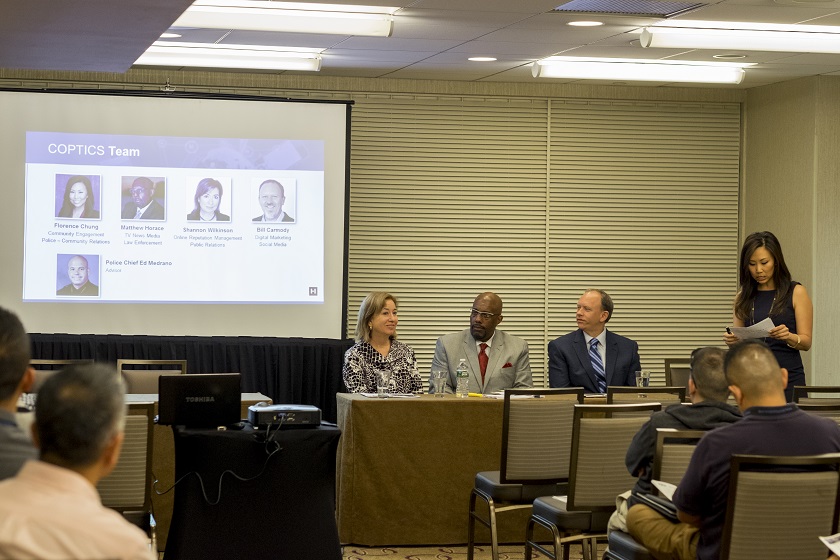
Law enforcement agencies have traditionally been behind the curve with using digital, social media and reputation management tools in their day-to-day operations. To help police departments become more effective in engaging with a digital media savvy public, three other experts and I have become active presenters in The Hetty Group’s Coptics Program. With the Coptics workshops and consulting program, Florence Chung, Bill Carmody, Matt Horace and I aim to help law enforcement professionals expand their use of the platforms that are helping shape public perception.

The Wall Street Journal has published an article about our new initiative. “Business Offers Blueprint to Improve Law Enforcement Optics,” by Ben DiPietro, is reprinted in full here.

“A group of reputation-management experts has banded together to create a program to help law enforcement agencies better manage their social media engagement and improve their perceptions with people and within communities. The so-called “Coptics” program developed by the Hetty Group draws from best practices employed by large companies that already have seen the value in being active members of social media to tell their stories and address issues that if not handled properly could blow up into big controversies, said Florence Chung, founder of the Hetty Group.

“We believe that if you aren’t telling your story, the world will,” said Ms. Chung. “And the world often doesn’t know the facts.” Shannon Wilkinson, chief executive of reputation-management firm Reputation Communications, said that although many people in law enforcement have stayed away from social media out of fear or because they prefer to stay out of the spotlight, doing so only cedes the conversation to their critics and others who aren’t representing their viewpoints. For law enforcement agencies or companies wanting to get more active in social media, Ms. Wilkinson said they need to ask themselves two questions: “How do we want to be perceived and by what audience? And how are we currently perceived and by whom?”

Bill Carmody, a digital marketing expert and chief executive of the firm Trepoint, said by teaching law enforcement how to be part of the digital conversation, and giving them tools to properly engage their audiences, will allow for departments to get involved in discussions before they go viral. Through better engagement, when incidents do occur, law enforcement will be in a better position to respond in real time because “that’s where the conversation is happening,” he said. “Your brand is being shaped by social media if you’re not shaping it yourself.”

Matt Horace, a former law enforcement official who now serves as a law enforcement analyst on CNN, said whether it’s a law enforcement agency or a big corporation, an organization needs to know how to manage a crisis and the communications surrounding it. And a key part of that is engaging on social media, knowing what’s being said and interacting in a way that is authentic and not in a way that seems disingenuous or that will erode trust. “This can’t be a stunt,” he said.”

If you work in law enforcement and would like to schedule a workshop or consulting session, please visit The Hetty Group. We also welcome support from corporations and philanthropies that would like to underwrite a workshop series in their community.

Left to right: Shannon Wilkinson, Matt Horace, Bill Carmody and Florence Chung lead an August 18, 2016 Coptics workshop at the National Asian Peace Officers Association Conference in New York City. Photo by Leven Bastian/Jolie Photography.


Baylor is the oldest continually operating university in Texas.  Chartered in 1845, the private Christian University is a nationally ranked research institution. Now it is embroiled in a crisis: sexual-assault victims, administrators accused of being indifferent to the issue and athletes who reportedly conducted the assaults. Kenneth Starr, a former U.S. Solicitor General, has resigned as chancellor at Baylor as “a matter of conscience.”

Benjamin Wermund, higher education reporter for the Houston Chronicle, has been covering this story since it broke.  He interviewed several communications experts about Baylor’s handling of the crisis.   Reputation Communications’ CEO Shannon Wilkinson recommended more transparency, including participating in the discussion on social media:

The school could do more to go on the offensive online, where the news about the scandal initially broke and where most people are forming — and sharing — their opinions of the situation. It could push its message out more on social media, including via Twitter, where the school has said little about the situation to its more than 68,000 followers. They aren’t addressing the crisis on Twitter, and they need to. They need to have a system to participate in the discussion, otherwise they completely lose control over public perception of how they are managing this.”

An Epic Crisis Facing Higher Education

We have written extensively about the sexual assault crisis at U.S. universities. Here are our most relevant posts, including a recent one about a different type of scandal at UC Davis.

Learning from UC Davis’ Online Reputation Debacle

Sexual Assault Cases Change Colleges’ Reputation Equation

Can Amherst Improve Colleges’ Response to Sexual Assault?

Institutions throughout the U.S. have failed to provide the information and resources that students need to protect themselves from becoming victims of sexual assault on campus…and to appropriately address the crisis when they are.  If you would like to learn more about the issue, we recommend viewing The Hunting Ground, a documentary film about institutional cover-ups of campus sexual assaults. CNN premiered it last year.


In this week’s Reputation Reboot, an industry leader asks how to get rid of a defamatory blog post that appears at the top of his Google search results. Although he used an online reputation management firm for several months, the item has not budged.


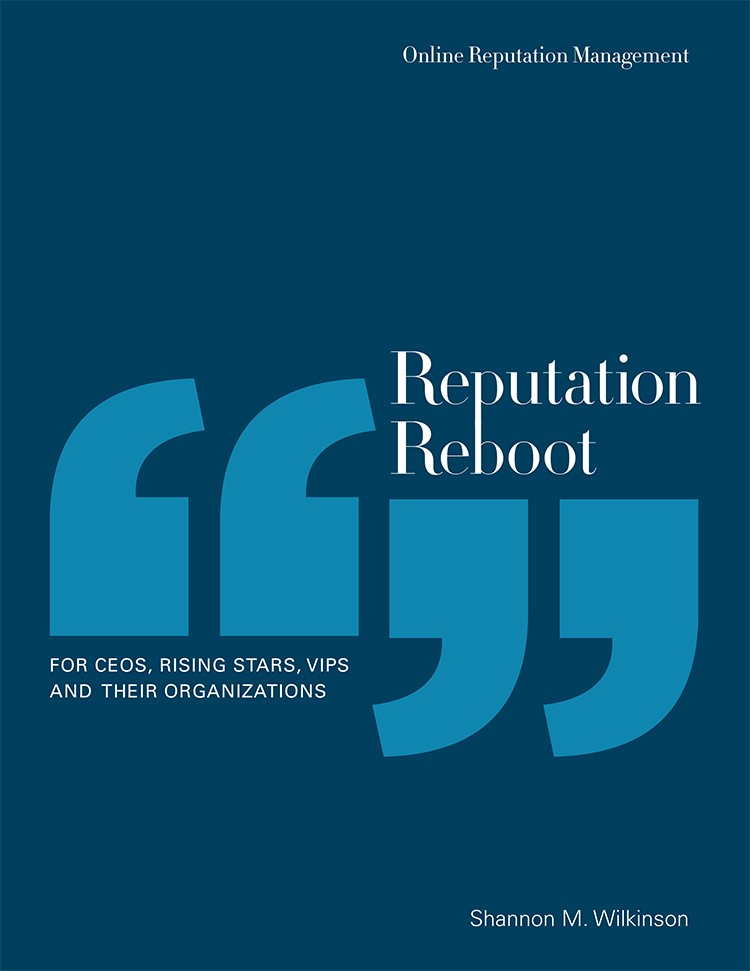
Reputation Reboot by Shannon Wilkinson

Our exclusive new guide to taking ownership of your online image is out. How to Look Better Online: Online Reputation Management for CEOs, Rising Stars, VIPs and Their Organizations was written by our founder, Shannon M. Wilkinson, in collaboration with our editing, content and design team.

How to Look Better Online draws upon our experiences improving and preventing the online reputation issues faced by a range of our clients. It is available as a downloadable eBook for all platforms. You can see a preview, learn more details and order a copy here.


Sallie Krawcheck is a top candidate to become the next head of the SEC, according to Dealbook, but it’s not just her record and resilience as a Wall Street executive that’s put her in the running.

Since she began tweeting last spring, Krawcheck has gained more than 11,000 followers. On LinkedIn she’s attracted an even larger audience—75,000 and counting. “She has drawn a significant following with her conversational style and posts on investment issues,” Dealbook says, referring to an earlier article in which Krawcheck called her move “part of a larger effort to style herself as an industry analyst” and “lend her Wall Street experience to the broader debate about the industry’s evolution.” Already among LinkedIn’s top “Thought Leaders” and Business Insider’s “101 Finance People You Have To Follow On Twitter,” she’s clearly had a great deal of success with her strategy.

Social Media Savvy

A big part of that success comes from Krawcheck’s deft use of social media to take ownership of her image and message. In the past, she would have had to rely on a public relations intermediary to arrange interviews and keep her name out there, as many prominent figures do. However, she has used social media to take more direct control of her voice and reach a larger audience at the same time. In a recent RIABiz.com article Dina Hampton examines how Krawcheck “used those months of technical unemployment to cultivate a distinct and intimate online voice that may, industry watchers say, deftly position her for her next move.” Speaking to Hampton, Gregory FCA Communications’ Joe Anthony adds that Krawcheck’s strategy has “broadened her footprint to where more people are recognizing her beyond the financial services space” and “gone from being seen as a sharp mind within wealth management/banking to a thought leader and business titan.”

While she may describe herself in her Twitter profile as a “current mom” and “crazed UNC basketball fan,” a closer look at Krawcheck’s online presence shows that her approach is far from amateur. In addition to regularly sharing useful links and poignant thoughts on both Twitter and LinkedIn, she has self-published popular posts like “Lessons Learned in Leading During a Crisis” and “What I Learned When I Got Fired (the First Time)” and penned op-eds for outlets including the Wall Street Journal, Washington Post and Politico.

Those posts have given her a chance to share her own perspective and narrative regarding her previous experience, while the op-eds appear to be setting the stage for her next move. “Lately Krawcheck has been peppering the media with her thoughts and strong recommendations about how to address, if not solve, the gigantic, chronic, almost genetic, ills of the global financial industry,” The Daily Beast’s Allan Dodds Frank wrote in October. “If she can continue her nonpartisan stance,” Frank observed, “she might be the ideal person to be in charge of consumer protection, be nominated to the Securities & Exchange Commission or to a Treasury Department job.”

Setting the Stage

Her undergraduate degree at the UNC School of Journalism has likely helped Krawcheck communicate effectively, but perhaps more important is how she has applied the same strategies that made her one of Wall Street’s top female executives to her social media endeavors. “The secrets of Krawcheck’s success, however, hinge on her social skills,” Heidi N. Moore wrote in 2009, adding that “she has built a reputation as Mrs. Clean” and combined “a warm interest in others’ feelings, an obsession with preparation” and with “frank talk and open ambition.”

Speculation about where she’ll end up next will surely continue, and there’s no guarantee that she’ll be tapped as the next SEC chair. But one thing is certain: as one of the first major names in the banking world to dive headfirst into social media, Sallie Krawcheck has reaped the vast potential of an open and savvy online strategy.