Lifestyle celebrity Sandra Lee was recently diagnosed with breast cancer. She chose to have a double mastectomy. That is a painful decision many women face. And as a woman that commands a public forum, she is sharing her experience to help other women and raise awareness of the disease.
This isn’t the first time a celebrity has publicly addressed personal struggles with breast cancer. But rarely is the public given such an intimate look at the experience. Sandra Lee’s unvarnished updates about the process—from pensive, brave photographs of her recuperating in her hospital room to serious images of her at home—put a human face on a difficult process.
New York Post’s “Page Six” column is one of many media outlets that has been following her progress, but she has reached her largest audience by publishing the photographs on her Facebook page. A benefit of social media is that it allows individuals to tell their personal stories to the public directly, without any intermediary. So Ms. Lee can keep ownership of her story, telling it day by day and ensuring it is told accurately. Even maintaining that level of control, sharing so personal a story in such an honest fashion is incredibly brave. We salute her choice.
On April 2, The Wall Street Journal published an interview with me: “CEOs Face Reputation Pitfalls If They Avoid Social Media.” It focuses on the dangers social media poses to executives, and on the reasons mistakes seem to happen so often.
The article is behind the newspaper’s pay wall, but you can read the full text here.
I would like to elaborate on some of the important points the interview touches on. Social media can be an attractive way of engaging with your consumers and the broader public, but it can easily turn into a reputation headache. No executive should have a Twitter account – or any presence on social media – unless she or he has a very clear strategy and measurable goals. And for executives in a regulated industry, or that have already been the target of negative publicity, our advice is to stay off.
Your Presence on Social Media May Not be Worth the Exposure
Why? Unless being active on social media serves a specific objective, it isn’t worth the exposure.
In some cases, social media can be a very effective tool. If the public strongly identifies the CEO with the brand, that CEO can use social media to build the audience for the brand. Elon Musk is a good example. He is Tesla (and everything else his company does). Mary Barra is on Twitter and uses it well. Social media is also often a good match for senior execs in advertising, media, fashion and transportation.
On the other hand, Howard Schultz, CEO of Starbucks, is not on Twitter. But Starbucks itself is, and has over seven million followers. Howard Schultz gets plenty of media exposure already. If he had a Twitter account there is a chance he may get too much attention…and attention that would detract from the Starbucks brand.
Social Media Tips for High-Profile Leaders
If you are a high-profile leader in any industry – or organization – and have not yet adopted social media but are thinking about it, consider taking these steps:
Study the social media landscape, paying special attention to what your peers are doing. Who is doing it well? Who is not? Who is staying away entirely?
Identify what you hope to achieve. Consider how it could impact your organization and its brand. Who will manage your account?
Mistakes do happen. How will you respond to a crisis? Are the benefits worth the possibility of a crisis? An example of one: 500 Twitter followers lampooning your last tweet…and then protesting your salary and recent layoffs at your firm.
The golden rule for social media is to stay neutral. If you want a presence but don’t want to create waves, post about topics that are safe. Avoid stating opinions that aren’t in line with your organization’s brand. That will help you avoid joining the list of executives whose social media gaffes have made headlines.
If you want to learn how to become an Internet celebrity, please continue reading. If you don’t care about becoming a celebrity but want to learn more about how social media works, same thing. If you work in business, traditional media, the non-profit world or politics and your goal is to reach as many people as possible in the most persuasive, cost-effective way, New York Magazine has provided you with an essential resource.
“The Weird Wide World of Internet Celebrity,”New York‘s informative guide, is a step-by-step, how-they-did it view of how (mostly) ordinary people have used social media to deliver a message, attract huge audiences and sometimes monetize that visibility. The cover story features several different people who have become famous (and often well-paid) by using mostly free or low-cost Internet tools to entertain or educate vast audiences. Most are teenagers or in their 20s.
It is a definitive guide to how social media works in terms of publishing original content and attracting audiences. Equally important, it illustrates why millions of teenagers and other consumers have turned away from traditional media outlets and replaced them with the Internet and their smart phones.
Many people continue to be on a learning curve regarding how social media works, why it is so popular and what the social media culture responds most enthusiastically to. If you are one, you won’t be after digesting this useful guide.
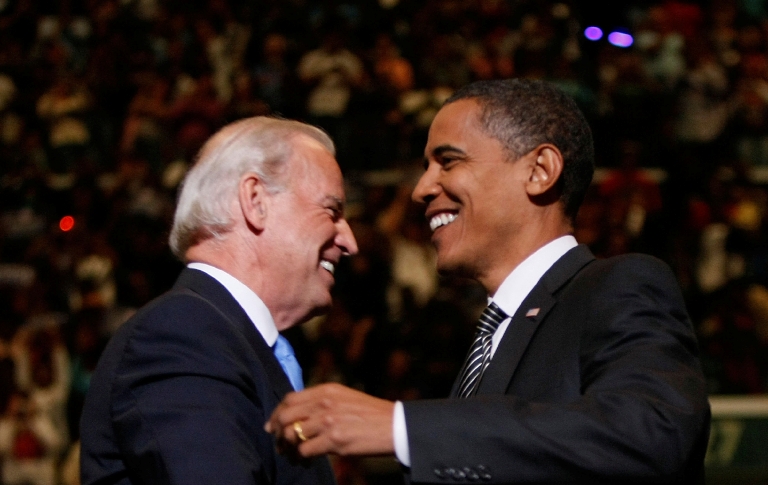
Vice-President Joe Biden has joined Instagram, the photo and video sharing service with over 100 million users. His first photo, shown below, won high praise from the media.
Now, 24 hours later, he has over 50,000 followers. In addition to sharing his photographs, they are amplifying his presence by discussing him online (and off). Sample comments posted on his Instagram page include:
the vice-president’s first picture is epic
Love the Ray-Ban aviators, sir!
Cool VP
Biden’s stepped-up social media presence indicates the first of many strategic moves to come from the Democratic Party as they prepare for 2016.
“Twitter is an opportunity. Facebook is an opportunity. To say what you feel. To try to pick people up. To try to be positive. To try to add something to society. To let people see you transparently. You cannot be defined if you’re on social media by someone else. You will define who you are, and if you’re negative, that’s your fault. But here is who you are. If you are negative, it will come through. Five years of being on twitter and facebook, are you gonna lie for five years? You are who you are. But we’re trying to tell those kids, you build your brand or you break your brand down. You are who you are through social media.”
A Master at Online Reputation Management
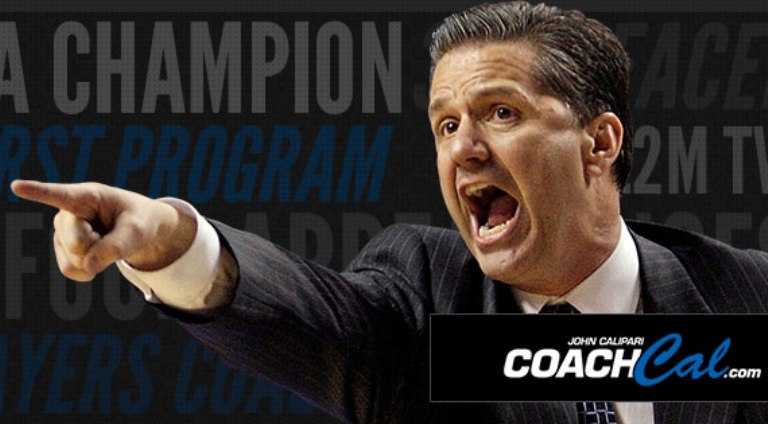
With NCAA violations blemishing his past success at UMass and Memphis, and critics accusing him of exploiting the NBA’s “one-and-done” rule to win his first national title in 2012 and lead the Wildcats to this year’s final, Calipari has certainly had his share of controversy. Through that, it’s been clear that he is shrewd and effective at managing his online reputation.
Since joining Twitter in 2009 (right around when he took over at Kentucky), Calipari has averaged 4.6 tweets per day, according to his account’s statistics on Socialbakers. “I give out information, I’m transparent to our fans,” he explained on ESPN Radio’s Mike and Mike. “I tell them how I’m feeling.” He gets help from CoachCal.com editor Eric Lindsey, who “oversees Coach Calipari’s social media platforms.”
Adept at Using Social Media to Build His Brand
Such candor has helped earn Calipari praise as “NCAA’s last honest man,” but it’s not the only aspect of online reputation management that he’s been adept at harnessing. He also recognizes how celebrity can bolster his brand and recruiting power, as he demonstrated while attending his friend Jay-Z’s concert at Barclay’s Center in 2012. “Calipari didn’t hesitate when it came to letting his 1.2 million Twitter followers know about his backstage pass to the concert, tweeting out this picture of himself in front of the stage,” Rob Dauster observed in a Sports Illustrated piece.
Even Calipari’s comments about social media above seem to be part of “selling his program,” as Dauster points out in a recent NBC Sports article. Calipari understands that the premier young players that are key to Kentucky’s success view social media not as a “waste of time,” as Pitino argued, but as a normal part of everyday life—and something they’ll need to know when they make it to the NBA.
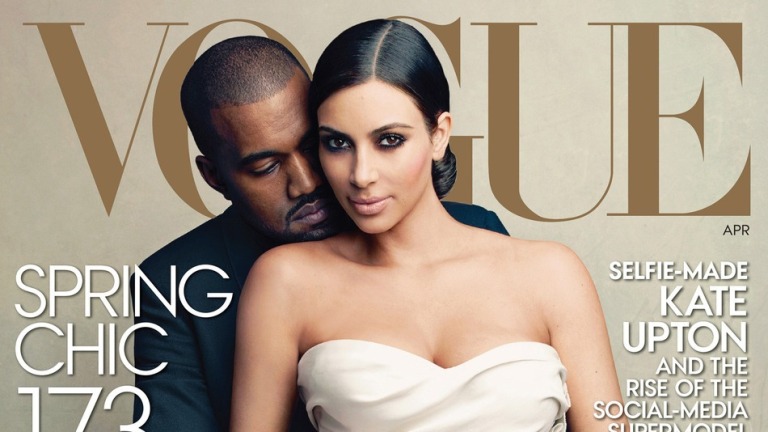
There’s been a lot of talk about Vogue’s choice to feature Kim Kardashian and Kanye West on its April cover, but Christina Binkley’s piece for the Wall Street Journal’s Speakeasy blog zeroes in on an important point:
Kim has 20.3 million Twitter followers, to Kanye’s 10.3 million. Vogue has a mere 3.63 million followers, so the magazine has everything to gain from this association, in a publishing world that is increasingly focused on social media.
Kim and Kanye landing a Vogue cover demonstrates how building and maintaining social media followers has emerged as a type of equity.
Cover Sparked Heated Debate
This isn’t anything new for Kim, who can make five figures from a single sponsored tweet, but it’s understandable that Anna Wintour’s decision has sparked heated debate. “Arguments reverberating around the Internet over the last few days have largely focused on this central question: Does Kim Kardashian deserve to be on the cover of Vogue?” observes the Washington Post’s Cara Kelly. Sarah Michelle Gellar and others appear concerned that Vogue is compromising its standards. But more likely those standards are just evolving.
Wintour explained her decision by invoking the magazine’s history of highlighting “those who define the culture at any given moment.” And social media now plays a significant role in culture. Perhaps Vogue’s choice of Kim and Kanye is a signal of the magazine’s adjustment to that significance—“evidence of a shift in target audience toward younger, more socially connected readers,” as Adweek puts it.
General Motors is using social media to manage customer complaints and its reputation — and using it well. How they are applying social media management is a good case study for other companies in crisis. (The Detroit auto manufacturer has recalled 1.6 million cars and faces roiling legal issues after top management hid defects that caused deaths for 10 years or longer.)
– GM’s Facebook page. In addition to hosting GM-produced content, it is also an open forum where customers can post comments and complaints. GM staffers are engaging them in real time with assistance and responses.
– @GM on Twitter. Frustrated customers who have spent an hour or more on the phone with GM customer service representatives have turned to Twitter to seek help – and found it in minutes.
“G.M. has a team of about 20 people based in Detroit that manages its social media presence — including monitoring about 100 independent auto forums — and responds to inquiries and complaints seven days a week,” reports Goel.
In addition to managing the crisis using traditional methods – including letters to car owners – GM created a video with CEO Mary Barra to keep customers and employees abreast of how the company is managing the situation.
As more companies use social media to better manage customer relations, they can learn from GM’s example.
At midnight last Thursday, Beyoncé put her own stamp on social media marketing. She bypassed the traditional music industry marketing machine and released a brand new album directly to her fans — on Instagram. Her team was so successful in avoiding leaks that it was a complete surprise.
Ben Sisario reported the unexpected release in The New York Times:
“The release of a blockbuster album has historically come with a few standard marketing moves. Flood the radio with an early single. Book as many TV appearances as possible. Line up partnerships with big retailers and consumer brands.
But at midnight on Thursday, when Beyoncé released her latest album, she did none of those things. Instead, she merely wrote, “Surprise!” to her more than eight million Instagram followers, and the full album — all 14 songs and 17 videos of it — appeared for sale on iTunes.
The stealth rollout of the album, “Beyoncé,” upended the music industry’s conventional wisdom, and was a smashing success.”
The Take Away for Traditional Business Leaders
What can more traditional C.E.O.’s and other business leaders take away from Beyoncé’s successful stealth move? The most important is that social media is a tool that enables users to take ownership of their message.
In online reputation management, the more control you have over the information about your brand online, the more well-balanced your online image is. If it is authentic, interesting and informative, it will have credibility.
Using social media to communicate directly to the public, with no filter of spokesperson or other third parties, enables your message to be viewed exactly as you intend it to be. You still can’t change how the media, critics and consumers respond, but you have complete management over what, how and when you introduce what you want them to know. That results in a more authentic picture of your point of view – one that is less easily skewed by others. It also enables a message that the media can use — including national news outlets.
In more traditional corporate cultures, doing this requires the participation of a lot of team members – including risk, compliance and legal officers. So planning such strategies and having them in your playbook before you need them, is a good strategy for 2014.
Above: Beyonce, Montreal 2013, by Nat Ch Villa
About You(Online)
Reputation Communications publishes You(Online) to help educate CEOs, C-Suite executives, rising stars and high net worth individuals about online reputation management.
Reputation Reboot addresses real-life online reputation management (ORM) challenges faced by CEOs, executives, VIPs and their organizations. Unless they are public figures, their names and related descriptions of all individuals and companies discussed are changed to protect their privacy. For a quick look at the types of situations facing many professionals, scroll down and check out the headlines.
Online reputation management enables you to take more ownership over what appears about you on the Internet.
Without it, the world controls how you look online.
Here are ten examples of the ways online reputation management is used by individuals, companies and organizations.
To ensure up-to-date and accurate information dominates search results for an organization or individual’s name.
To ensure that factual, credible reference material is readily available online.
That reduces the chance that fraudulent information will impact a brand.
To remove unwanted or inappropriate information, photographs or other content from the first few pages of Google search results.
To monitor social media and online forums for red flags signaling potential on- and offline threats against high-profile individuals and their organizations.
To create a strong online presence about a topic.
That presence acts as a barrier against potential distortions from third-party content, including anonymous and defamatory material. Without it, such items can go straight to the top of searches – and stay.
To ensure that your story is told by you and not by former partners or other potentially biased parties.
To establish a reputation within your area of expertise on multiple online platforms.
To create an online legacy for a VIP who is preparing for retirement or to exit an organization.