Video is an ideal tool to promote personal brands. It gives you more control over your image and it is an excellent way to establish a new image for yourself (and your organization) as you pursue new initiatives, build new audiences and seek investment capital. As an added benefit, the video will function as a portfolio piece to interest producers of broadcast media in featuring you as a guest expert on their programs.
In this week’s Reputation Reboot, we provide tips for a start-up CEO who is concerned his youthful appearance may be a drawback as he seeks out investors.
If you’re concerned about age discrimination in the job marketplace, you have plenty of company. It’s a challenge for both men and women…and not only on the upper age spectrum. Entrepreneurs and employees in their 20s and 30s also face it. We’ve heard many stories about their strategies to project an image they feel will help them win VC funding or a promotion.
This week in Reputation Reboot, we provide strategic advice to a seasoned female executive who seeks tips for minimizing age discrimination in her job search. Next week, we will offer solutions to a 29-year old male CEO who faces a different type of challenge.
Negative employee reviews are a growing problem for many companies. According to a survey published today in The Wall Street Journal’s Risk & Compliance section:
A survey of 1,012 U.S. adults by Corporate Responsibility Magazine and Cielo Healthcare found 86% of women who responded said theywouldn’t join a company with a bad reputation, compared with 65% of men. And 92% of men and women said they would consider leaving their present jobs to join a company with an excellent reputation.
That makes this week’s Reputation Reboot topic a timely one. It addresses one of the most frequently asked questions we receive: how to improve employee reviews.
I’m pleased to introduce Reputation Reboot, our new weekly advice column.
Reputation Reboot is the result of years of being asked for advice, counsel and services regarding online reputation issues by CEOs, leadership teams, VIPs, rising stars and many other types of people and their organizations. Their questions have come up through business channels and networking events as well as other settings ranging from dinner parties to airports.
Our main goal with the column is simply to educate readers. Online reputation management (ORM) has a best-practices playbook that ORM providers customize with their own secret sauce. But the game changes when you are a high-profile or high net worth individual. There is already so much content about you online that the standard approaches will fail to rebrand your image. Templates that work for many won’t work for you. That, in a nutshell, is why we publish You(Online).
With Reputation Reboot, we also want to contribute to the greater understanding of this fast-growing industry. There is much confusion over how ORM differs from branding, public relations and digital marketing. (The quick explanation: It addresses the core goal of restructuring the order of content that appears on Google and other search engines.)
Lastly, working in this field provides us with a bird’s eye view of digital culture. The Internet sphere and all of the issues that come with it — crises, privacy, endless conversations, freedom of speech, social upheaval and the ability to connect with anyone in the world — are very now. It is a fascinating place to be. We hope that by sharing our front-row view with you we will help you shape your digital image. That’s because we want the world to see you the way you want to be seen. Enter Reputation Reboot.
Not so long ago, Volkswagen claimed the top auto industry spot in Fortune’s annual World’s Most Admired Companies list. The Economist highlighted the Germany automaker’s global ascent in an article titled “VW Conquers the World.”
Now a scandal has put Volkswagen’s reputation in freefall. It comes at a time when Germany is in the world’s eye – leading the EU toward resolution of many issues, most notably the migrant crisis. VW is Germany’s largest employer and as iconic as Starbucks or Ford is in the United States. As far as scandals go, this is a massive one. It has damaged the opinion that many of us have had that the brand means something special—an opinion that extends back to the Beetle.
General Motors covered up faulty ignition switches for years — and they resulted in several deaths as well as 30 million recalls. But GM is back and selling lots of cars. Can Volkswagon recover?
We spend a lot of time observing best and worst practices in reputation rebuilding at companies large and small. Here are our top tips for VW’s beleaguered leadership.
Follow Mary Barra’s lead. As CEO of General Motors, she has performed crisis management almost flawlessly. All CEOs can learn from her use of social media to communicate with consumers.
Take a page from Toyota. We’ve written extensively about why and how the top car company has adeptly rebounded from multiple crises.
It’s worth taking a look at the tremendous shifts in reputation VW has experienced over the course of its 75-year history.
An Unlikely Origin
VW began as a state-supported operation in Nazi Germany. While Hitler heralded the Beetle as an affordable “people’s car” (in German, volkswagen), VW’s early years did not live up to that reputation. “Only 630 Beetles were made there during World War II—and distributed to the privileged,” according to Der Spiegel.
A Reputation Reborn
Demand for Beetles during the occupation kept VW alive following World War II, but there was little international interest. After looking at the company as a possible acquisition, the CEO of Ford, for instance, famously concluded that VW wasn’t “worth a damn.” But over the coming years Beetle’s popularity made it a symbol of West Germany’s “economic miracle,” and VW’s success was “one of postwar Europe’s most glittering economic achievements,” according to a Time magazine article from 1963. By that year it was the world’s third largest automaker, and less than a decade later the Beetle’s total production count eclipsed Henry Ford’s Model-T.
Transformation: from “Hitler’s car” to “Beetlemania”
Upon its initial introduction in the United States, VW’s reputation couldn’t escape the Nazi association. “I even tried calling the VW the ‘Victory Wagon’ to take the curse off it, but the press referred to it only as ‘Hitler’s car,’” said Dutch car dealer Ben Pon, who shipped the first Beetles stateside in the late 1940s. Soon, though, New York agency Doyle Dane Bernbach wiped away that stigma with a string of unforgettable advertising campaigns, including “Think Small,” Advertising Age’s top campaign of the century. By emphasizing VW’s impact on an owner’s reputation and image instead of the traditional touting of features, these campaigns were an innovative and influential development in the history of advertising.
Post-Beetle: less risk, but no more mania
When Beetlemania subsided, the void left by such a defining model threatened to undo VW’s reputational gains. Not wanting to repeat the same mistake, the company unveiled a more diverse series of models, including the Passat, Golf and Polo. VW acquired Audi in 1964, and those new models integrated the technology and luxury Audi was known for. They prevented VW’s image from flat-lining but ushered in an extended period of mixed results. Things began to look brighter by the turn of the new millennium, as Audi’s jump to the luxury class occupied by BMW and Mercedes-Benz gave VW’s reputation a boost in the same direction.
Poised for a boom
Reputation has played a major factor in VW’s more recent global endeavors. In many countries “it has been around long enough to be seen as a domestic firm, so protectionists usually leave it alone,” according to The Economist. Its longstanding reputation in China helped distinguish it from pack in the world’s largest auto market. “VW bet on China nearly 30 years ago,” The Economist noted. “A glut of cheap cars is hurting prices in China but VW’s premium models are doing well.”
Rebuilding its image will be crucial for VW’s future success. Only a few years ago, its crowdsourced “People’s Car Project” engaged China’s drivers, attracting 119,000 ideas and 33 million hits. Incorporating that kind of virtual strategy in the climb to regain its reputation might help VW recover…if it can.
Two of the most respected magazines in the art world have made headlines by announcing their merger. Art in America, an elegant glossy established in 1913, is merging with ArtNews, established in 1902, which is renowned for its annual guide to the top collectors.
Art in America, ArtNews and their peers represent and report on a rarefied world, one that traffics in the highest levels of taste, education, and finance. They bring together some of the most creatively incandescent people in the world with some of its wealthiest.
When We Transitioned to Digital
My prior company, Cultural Communications, specialized in PR. Because of that, I had a first-hand look at the seeds that grew into this merger. Cultural Communications was an early adapter of the Internet. We were one of the first companies in our industry to offer sophisticated digital content capabilities to our clients.
When the online reputation management (ORM) industry was still in its infancy, Cultural Communications received requests by a range of companies to orchestrate online campaigns. That is when I decided to refocus on digital brand-building and re-form the company as Reputation Communications.
As my company was retained by hedge funds and financial services companies to provide online reputation management services, we reduced the number of art projects we took on to prepare for our transition into a new industry and new verticals. A book we promoted at that time was Skate’s Art Investment Handbook, published in 2006 and authored by a Russian financier named Sergey Skaterschikov, the CEO of Skate Capital.
The Once-Opaque Art Industry
Mr. Skaterschikov, then in his early 30s, became the first independent provider of stock indices and company data on Russian and later Eastern European emerging capital markets when he was 20. He turned his attention to the art market after he noticed the large size of many of its transactions. As he researched it, he was struck by its lack of transparency– and by its general inefficiency when compared to other investment markets. He wrote Skate’s Art Investment Handbook in part to explain why the art market’s operational structure was unsustainable. He predicted, among many other things, that auctions and art sales would in coming years be handled online with full transparency – or at least significantly more.
As publicists for his book, we found the business and investment media to be receptive to his ideas. The Wall Street Journal was the first to express interest; Forbes, like many other publications, wanted to meet him personally. The art world media, though, was skeptical. There were art journalists that met Mr. Skaterschikov, read his book and became colleagues. But ArtNews and many other art periodicals ignored Skate’s Art Investment Handbook. They were as resistant toward his point of view as horse-drawn carriage owners once were toward Henry Ford.
The Deal
Last year Mr. Skatershikov’s investment company, Skate Capital, bought ArtNews. It was later revealed that Skate was acting on behalf of the Polish company Abbey House, though he retained a percentage of ArtNews’ ownership. News has broken that ArtNews will buy 100 percent of Art in America, TheMagazine Antiques, Modern Magazine and related archives and digital properties from owner Peter Brant (though he will retain Interview). Skate Capital will sell him 6,400,500 shares of the newly created company Artnews S.A. for $3.4 million. BMP, Mr. Brant’s company, and Skate Capital plan to list Artnews on Germany’s Deutsche Boerse in 2016.
Very notably, the most visible portion of the merger will take place online, creating the world’s largest online art world media property. Digital content can be monetized in a variety of ways, as big players like BuzzFeed and VoxMedia show. (On the same day as the ArtNews and Art in America merger was made, NBC Universal neared a deal to invest $250 million in BuzzFeed. The site is known for its popular cat videos, among other widely-shared content that often goes viral, raising its value to advertisers.)
ArtNews and Art in America are unlikely to get into the cat video arena, but publications in many fields can still learn from the merger. Time Inc, for example, is one of many publications grappling to stay alive and relevant in this new digital age. They might do well to take a page from Mr. Skatershikov’s playbook.
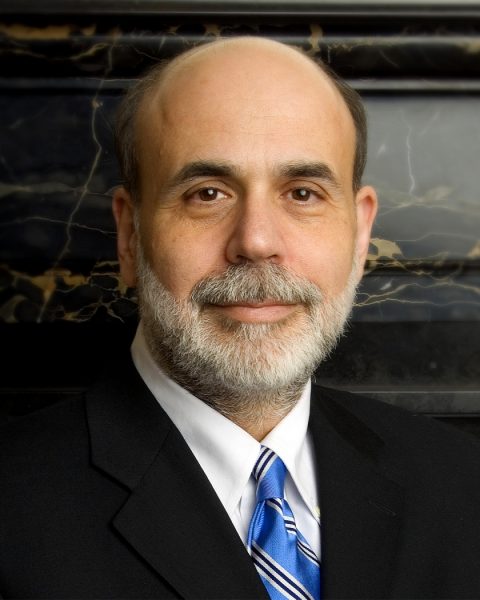
After leaving his post last year as Chairman of the Federal Reserve, Ben Bernanke joined the Brookings Institute and became a senior advisor to the hedge fund Citadel. He has also been blogging, something he was not able to do at the Fed.
As the June 15 issue of Fortune put it: “Newly christened econoblogger Ben Bernanke has been throwing some rhetorical punches on his Brookings Institution site,” including claims that Larry Summers pays insufficient attention to global affairs and criticism of Elizabeth Warren’s call for limits on the Fed’s emergency lending powers.
So far, he has followed the mission he laid out in his first blog post in late March: “To comment on economic and financial issues without my words being put under the microscope by Fed watchers.”
Blogging is an effective brand builder for anyone, but it is especially well suited to Mr. Bernanke at this stage of his public life. His blog provides him with a 24/7 opportunity to weigh in on economic issues and gives him a forum to comment freely without the danger of being misquoted. It provides the media with a steady stream of sound bites as well as relevant reasons to interview him. It is also a strong tool for building an audience for his memoir, The Courage to Act: A Memoir of a Crisis and its Aftermath, which is scheduled to come out in October.
Bernanke’s blogging frequency varies from three posts a week to one every couple of weeks. He tweets whenever a new blog is published (his tweet announcing the launch of his blog was retweeted 946 times). With 44,300 Twitter followers, he’s ahead of Larry Summers (who has 40,330) but behind Elizabeth Warren (who has 245,747).
Anyone grappling for an effective turnaround strategy after a humiliating and public experience can take a page from Monica Lewinsky’s playbook. But especially if you are female. Being shamed, or the fear of becoming the subject of public shaming, has always been used to make women retreat from public life—or even avoid it altogether.
Here are the steps Ms. Lewinsky used to overcome her naysayers, reclaim her name and rebrand after initially withdrawing from the public eye.
– Trying a range of entrepreneurial and commercial spokesperson appearances to earn the money to pay her legal fees, as well as to establish a new position in life.
– Reestablishing her public voice (in 2014) by publishing an essay in Vanity Fair, “Shame and Survival.” She addressed her past directly. That step led to an invitation to discuss the Clinton crisis as part of a National Geographic Special about the ‘90s. She did not play the shamed victim, but discussed the devasting impact of cyberbullying, which played a significant part in her humiliation.
– Becoming a spokesperson against cyberbullying and online harassment. She launched her official new public image by appearing at a 2014 Forbes summit. Portions of her talk there were televised around the world.
In 2015, she delivered a TED talk, “The Price of Shame,” calling for a more compassionate Internet. It has been viewed online 4,712,119 times. She was invited to become an ambassador and strategic advisor for the anti-bullying organization Bystander Revolutions.
She was a featured speaker at the Ogilvy and Mather Inspire Lecture at the recent Cannes Lions International Festival of Creativity. In conjunction with her talk, Ogilvy launched a viral campaign to encourage more people to take a stand against cyber-shaming.
Her comeback follows three key steps: retreating from public life, reemerging by directly addressing her public image in a high-profile outlet and becoming more visible with TV appearances that also attract large numbers. Those numbers make her a valuable commodity for other media platforms – as well as commercial brands. She is now a celebrity with a mission millions of people support. Many of them follow her on Twitter @MonicaLewinsky.
About You(Online)
Reputation Communications publishes You(Online) to help educate CEOs, C-Suite executives, rising stars and high net worth individuals about online reputation management.
Reputation Reboot addresses real-life online reputation management (ORM) challenges faced by CEOs, executives, VIPs and their organizations. Unless they are public figures, their names and related descriptions of all individuals and companies discussed are changed to protect their privacy. For a quick look at the types of situations facing many professionals, scroll down and check out the headlines.
Online reputation management enables you to take more ownership over what appears about you on the Internet.
Without it, the world controls how you look online.
Here are ten examples of the ways online reputation management is used by individuals, companies and organizations.
To ensure up-to-date and accurate information dominates search results for an organization or individual’s name.
To ensure that factual, credible reference material is readily available online.
That reduces the chance that fraudulent information will impact a brand.
To remove unwanted or inappropriate information, photographs or other content from the first few pages of Google search results.
To monitor social media and online forums for red flags signaling potential on- and offline threats against high-profile individuals and their organizations.
To create a strong online presence about a topic.
That presence acts as a barrier against potential distortions from third-party content, including anonymous and defamatory material. Without it, such items can go straight to the top of searches – and stay.
To ensure that your story is told by you and not by former partners or other potentially biased parties.
To establish a reputation within your area of expertise on multiple online platforms.
To create an online legacy for a VIP who is preparing for retirement or to exit an organization.