
All posts by Shannon M. Wilkinson

About Shannon M. Wilkinson

Shannon Wilkinson is the founder and CEO of Reputation Communications.

Today, Business Insurance published an article about how global expansion adds to companies’ reputational risks.

I was interviewed for the piece. An excerpt:

“While the speed at which information can travel through social media can enhance reputation risk, social media can be a valuable tool in managing reputation risks, said Shannon M. Wilkinson, CEO of Reputation Communications in New York. Social media audits can provide important information before a company enters a market, she said.

“Social media provides a barometer into all those kinds of things,” she said. “It can be done quickly. It can be done cheaply.”

Such social media research can provide information on perceptions of products, companies or marketing campaigns, as well as an opportunity to learn from competitors’ experiences, Ms. Wilkinson said.

“They can go to Twitter and they can see what their peer group’s doing,” she said. “It’s a very good way of observing best and worst practices.”

It also can provide information on whether signing a particular celebrity spokesperson might be a big reputation risk mistake.

“He might be a face for a different kind of product, but not in this area,” Ms. Wilkinson said. “All of this is researchable and it’s not so much about making a judgment; it’s about determining what is the most appropriate affiliation for your company or your product launch.”

A full copy of the article is available at Business Insurance.


Papa Johns

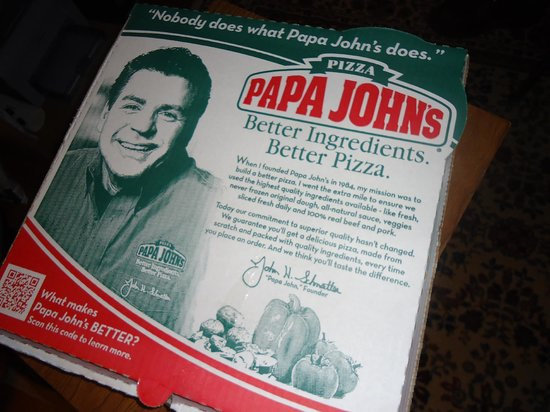
Since founding Papa John’s in the back of his father’s bar in 1984, John Schnatter has built his business into a leading international pizza delivery chain. Its reputation for customer service, quality and value has fueled that growth and distinguished it from competitors like Domino’s and Pizza Hut.

Papa John’s has deftly built and maintained that reputation, but recently there have been challenges. The first challenge occurred earlier this year, when a racial slur on a receipt at Harlem Papa John’s went viral.  Papa John’s quickly stepped in to protect its image. Just a day after the offensive receipt appeared online, the chain took to Twitter and Facebook to apologize and announce that the employee responsible had been fired.

Politics and Pizza

The pizza chain has been less successful in its response to the more complex controversy surrounding Schnatter’s own comments about the Affordable Care Act. Discussing his view of the health care law over the summer and after the presidential election, Schnatter drew extensive media coverage and triggered both positive and negative reactions on social media. He attempted to clarify what he had said in a Huffington Post blog post, but his explanation doesn’t appear to have succeeded in swaying public perception or distancing the Papa John’s brand from such a heated political issue. A recent YouGov BrandIndex report found that the controversy has negatively impacted the chain’s reputation. Chicago journalist Edward McClelland may have said it best: “Everyone eats pizza. And when you’re trying to sell a product to everyone, it’s not smart to alienate the 51 percent who voted for a winning presidential candidate.”

Papa John’s doesn’t need to look further than its own recent successes for a strategy that might help repair its reputation. In 2008, after drawing ire and boycott threats from Cleveland Cavaliers fans for t-shirts that insulted NBA star LeBron James, Papa John’s made up for it by selling pizzas to Cleveland residents for just 23 cents and donating to the Cavaliers Youth Fund. That approach earned the chain one of PRSA’s Silver Anvil Awards for Crisis Communications. Americans may clash when it comes to sports teams and politics, but, to borrow from the quote above, everyone eats pizza.


Pepsi has announced a trail-blazing, $50 million collaboration with superstar Beyonce. The deal combines Pepsi advertising and marketing with an estimated $25 million-dollar creative content development fund to support the singer’s own conceptual projects.  That’s the interesting part. “For Pepsi, the goal is to enhance its reputation with consumers by acting as something of an artistic patron instead of simply paying for celebrity endorsements,” reports Ben Sinsario.

Affiliating with Beyonce as an artistic patron will align Pepsi with far more benefits than a standard commercial endorsement. Pepsi will attain luster from the sheen reflected by Beyonce’s creativity, blue-chip image and relationships with the biggest names in entertainment. Her husband Jay-Z is a powerhouse on all levels. It is a brilliant relationship for Pepsi.

Arts Patronage Has Always Been the Ticket to Superstar Prestige

The patronage aspect of the deal revisits corporate support of the arts campaigns during the ‘70s and ‘80s. American Express, Exxon and other major companies underwrote national tours of blockbuster art exhibitions and dance companies. Such sponsorships aligned them with wealthy, educated cultural audiences.  Many corporations replaced arts sponsorships with sports underwriting.

Arts patronage has always been a conduit to status. But affiliating with contemporary culture – art, film, literature, music – confers a cool factor like no other.  (The star-studded Miami Art Basel fair, which closed yesterday, attests to that. So do the dozens of private jets that flood Miami’s airports just before it opens each year.) In supporting Beyonce’s creative projects, Pepsi is enabling her with a bigger platform for her creative ideas. We trust it isn’t just another a commercial deal.

Consumers’ Desire for Authenticity Influenced the Concept

Brad Jakeman, president of PepsiCo’s global beverage group, attributed their decision to authenticity.

“Consumers are seeking a much greater authenticity in marketing from the brands they love,” he told Ben Sisario. “It’s caused a shift in the way we think about deals with artists, from a transactional deal to a mutually beneficial collaboration.”

In other words: consumers are tired of being sold to. Pepsi and Beyonce’s management and marketing teams have responded using the key principles of reputation management: authenticity and trust. We anticipate they’ll deliver the goods, too.


Sallie Krawcheck is a top candidate to become the next head of the SEC, according to Dealbook, but it’s not just her record and resilience as a Wall Street executive that’s put her in the running.

Since she began tweeting last spring, Krawcheck has gained more than 11,000 followers. On LinkedIn she’s attracted an even larger audience—75,000 and counting. “She has drawn a significant following with her conversational style and posts on investment issues,” Dealbook says, referring to an earlier article in which Krawcheck called her move “part of a larger effort to style herself as an industry analyst” and “lend her Wall Street experience to the broader debate about the industry’s evolution.” Already among LinkedIn’s top “Thought Leaders” and Business Insider’s “101 Finance People You Have To Follow On Twitter,” she’s clearly had a great deal of success with her strategy.

Social Media Savvy

A big part of that success comes from Krawcheck’s deft use of social media to take ownership of her image and message. In the past, she would have had to rely on a public relations intermediary to arrange interviews and keep her name out there, as many prominent figures do. However, she has used social media to take more direct control of her voice and reach a larger audience at the same time. In a recent RIABiz.com article Dina Hampton examines how Krawcheck “used those months of technical unemployment to cultivate a distinct and intimate online voice that may, industry watchers say, deftly position her for her next move.” Speaking to Hampton, Gregory FCA Communications’ Joe Anthony adds that Krawcheck’s strategy has “broadened her footprint to where more people are recognizing her beyond the financial services space” and “gone from being seen as a sharp mind within wealth management/banking to a thought leader and business titan.”

While she may describe herself in her Twitter profile as a “current mom” and “crazed UNC basketball fan,” a closer look at Krawcheck’s online presence shows that her approach is far from amateur. In addition to regularly sharing useful links and poignant thoughts on both Twitter and LinkedIn, she has self-published popular posts like “Lessons Learned in Leading During a Crisis” and “What I Learned When I Got Fired (the First Time)” and penned op-eds for outlets including the Wall Street Journal, Washington Post and Politico.

Those posts have given her a chance to share her own perspective and narrative regarding her previous experience, while the op-eds appear to be setting the stage for her next move. “Lately Krawcheck has been peppering the media with her thoughts and strong recommendations about how to address, if not solve, the gigantic, chronic, almost genetic, ills of the global financial industry,” The Daily Beast’s Allan Dodds Frank wrote in October. “If she can continue her nonpartisan stance,” Frank observed, “she might be the ideal person to be in charge of consumer protection, be nominated to the Securities & Exchange Commission or to a Treasury Department job.”

Setting the Stage

Her undergraduate degree at the UNC School of Journalism has likely helped Krawcheck communicate effectively, but perhaps more important is how she has applied the same strategies that made her one of Wall Street’s top female executives to her social media endeavors. “The secrets of Krawcheck’s success, however, hinge on her social skills,” Heidi N. Moore wrote in 2009, adding that “she has built a reputation as Mrs. Clean” and combined “a warm interest in others’ feelings, an obsession with preparation” and with “frank talk and open ambition.”

Speculation about where she’ll end up next will surely continue, and there’s no guarantee that she’ll be tapped as the next SEC chair. But one thing is certain: as one of the first major names in the banking world to dive headfirst into social media, Sallie Krawcheck has reaped the vast potential of an open and savvy online strategy.


Sexual assault is epidemic on college campuses, but the New York Times’ Richard Pérez-Peña reports that recently appointed Amherst College president Biddy Martin is poised for a major breakthrough on this controversial issue.

Colleges and universities have often been silent, even secretive, when it comes to cases of on-campus sexual assault, according to the nonprofit Center for Public Integrity. But striving to preserve the image and standing necessary to compete in the world of higher education, can compromise not just standards of accountability and transparency, but also the safety and welfare of their students.

“In spite of a recent Department of Education directive requiring schools to investigate sexual assault under Title IX, many schools would rather cover up a reported rape to maintain the school’s reputation,” Whitman College student Rachel Alexander recently wrote in a blog post for The Nation. That sentiment has been echoed widely by many others, including a former Amherst student whose account of her own horrifying experience “dominated campus conversations and “drew worldwide attention,” according to Pérez-Peña.

Agents for change

Amherst’s Dr. Martin has emerged as a leader on this issue, quickly moving to address the incident on her campus openly and on multiple fronts, including with a direct and candid letter to the Amherst community and an ongoing “Action Checklist” documenting the steps that the college is taking to deal with the issue.

Dr. Martin previously sought ambitious changes at the University of Madison-Wisconsin and Cornell University with mixed results, but her latest move is likely her biggest and boldest yet, bringing together her scholarship in gender studies with leadership prowess and steely resolve. “The events unfolding at Amherst could be the catalyst for unprecedented change there,” writes Inside Higher Ed’s Allie Grasgreen. “Martin’s response should be a model for other universities,” according to Colby Bruno of the Victim Rights Law Center. The president struck a similar note in her aforementioned letter: “Amherst, given its values, its commitment to community, and its size should be a model of education, prevention, and effective response when violations occur.”

Biddy Martin has shown no signs that she’ll trade in such principles for a more conventional and superficial public relations strategy, and administrators on college campuses everywhere would be wise to follow suit. “It’s an incredible opportunity to have a conversation about this issue,” she told the Times. “These are the kinds of things I think we’re alive to think about.”


Earlier this month CNN’s Anderson Cooper revealed that he is gay in a letter to The Daily Beast’s Andrew Sullivan.

According to the Huffington Post, Cooper’s decision to officially come out followed “a long discussion with his team making sure he wasn’t committing career suicide.” With rumors that Cooper may soon marry, that letter could be part of a larger plan to open up about his personal life while closely managing the tone and context of that revelation.

A Good Choice

The decision to make the announcement was a good choice. “I’ve always believed that who a reporter votes for, what religion they are, who they love, should not be something they have to discuss publicly,” Cooper states in his letter to Sullivan. But he also acknowledges that keeping his sexual orientation private had the potential to harm his reputation for honest and accurate journalism. “It’s become clear to me that by remaining silent on certain aspects of my personal life for so long, I have given some the mistaken impression that I am trying to hide something –something that makes me uncomfortable, ashamed or even afraid. This is distressing because it is simply not true.”

Taking Control of His Message

By choosing to share the news in a thoughtful and eloquent letter to Sullivan, a friend and himself an openly gay journalist, Cooper took control of his message and preempted any threat to his reputation that his previous secrecy had posed. By doing so he was also able to frame the announcement in a way that underscores his values and reputation, both personally and professionally. “I have always been very open and honest about this part of my life with my friends, my family, and my colleagues,” Cooper wrote, adding that he has always tried to keep his private affairs and identity out of his journalism. “I’ve never wanted to be any kind of reporter other than a good one, and I do not desire to promote any cause other than the truth.”

Cooper also minimized the story’s ability to expand by making the announcement while he was in Botswana, out of the reach of the media.

The way Anderson Cooper has handled this is a model of how to get in front of potentially controversial personal issues.  On a broader level, Cooper has set an important example by treating sexual orientation as a subject that is not relevant to public or professional reputation.


Dyan Machan has an insightful piece in Smart Money about how Lady Gaga used her personal story, empathy and social media to become the most Googled person of all time (and earn $100 million this year). Her article is based on the business school case study, “Lady Gaga, Born This Way?,”  coauthored by Martin Kupp, program director of the European School of Management and Technology in Berlin.

From the “If the Rules Don’t Work, ReWrite Them” section:

“Germanotta knew talent wasn’t enough to draw attention in a crowded music landscape…. perhaps most important, she worked at first without help from a very skeptical recording-industry establishment. One label turned her down; another dropped her, reportedly after one of its executives made a cutting-his-throat gesture while listening to one of her tracks. So Gaga fed her music and promotional info directly to her fans, via social media. An early-adopting Twitter user, she communicated with her followers an average of five times a day and used the service to announce the release dates of her new albums. Kupp says it’s all an example of how upstarts need to ignore the standards set by large, risk-averse corporations: “If you don’t break the rules, you won’t make it,” he declares.”

Another example of how social media has eliminated the need for many of the middle-men once necessary to launch and build a career, business and brand.